Teaching the Future of Nursing: WVU professor earns top book award
A WVU School of Nursing professor is gaining national recognition for a book that is helping redefine how future nurses are educated.
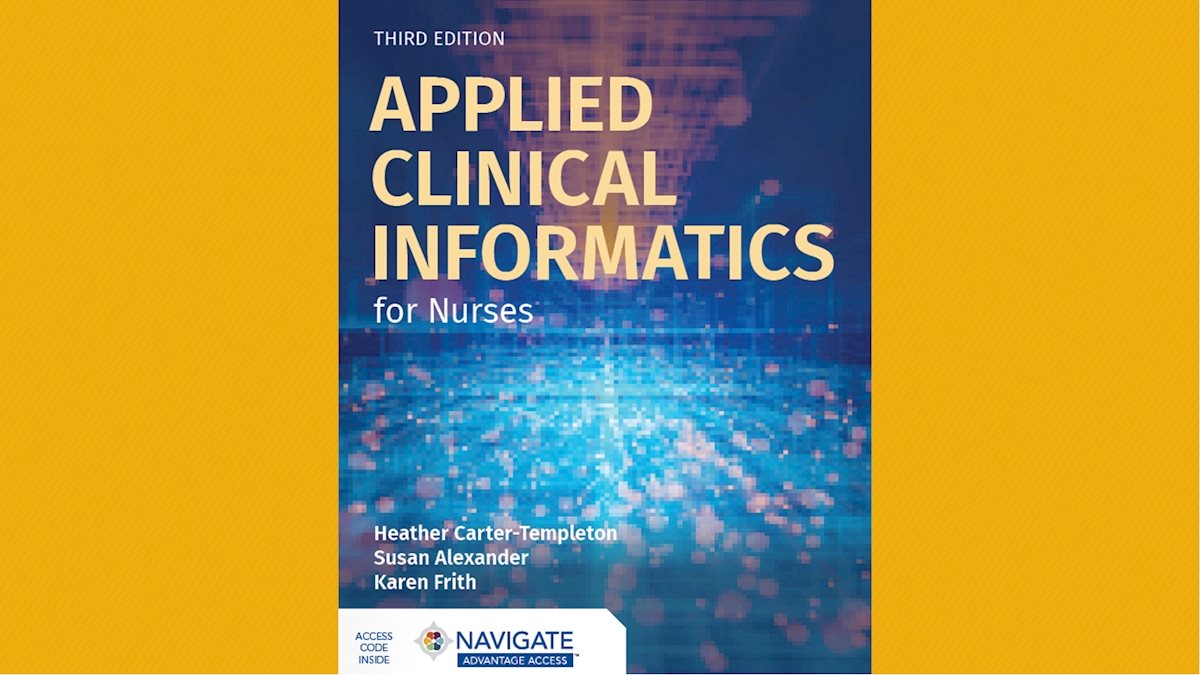
Dr. Heather Carter-Templeton, Chair of the Adult Health Department, and her co-authors earned first place in the 2025 AJN Book of the Year Awards for their textbook, “Applied Clinical Informatics for Nurses.”
She described the moment they won as both unexpected and meaningful, learning about it at the American Association of Colleges of Nursing (AACN) Doctoral Education Conference.
The award, presented by the American Journal of Nursing, recognizes outstanding contributions to nursing literature and education. Carter-Templeton’s book was honored in the Information Technology, Information Science, Telehealth, and Technology category, which reflects the role of digital tools in healthcare.

Now in its third edition, “Applied Clinical Informatics for Nurses” was designed with a clear purpose: to help nursing students and educators better understand and apply technology in clinical settings. The textbook is widely used in undergraduate nursing programs and aligns with national expectations that students learn about informatics.
“We must teach students concepts related to technology,” she said. “This helps equip students to work in our high-tech environments.”
Carter-Templeton, and her co-editors played an important role in shaping the structure and direction of the book, helping ensure that the content is both practical and accessible. She said it’s important to align what’s in the book with the content students are expected to learn so that professors can use it more easily in their classes.
The book is organized into three sections and includes 16 chapters that guide readers through foundational concepts, real-world applications, and tools used in clinical informatics. It also features case studies and examples that allow students to connect classroom learning to patient care.
According to Carter-Templeton, one of the biggest challenges in developing the book was keeping pace with the rapid changes in healthcare technology.
That pace of change is exactly why the subject matter is so critical. From electronic health records to wearable devices and artificial intelligence, nurses are increasingly expected to engage with complex data and digital systems in their daily work.
“We are extremely reliant on technology in today’s healthcare environments,” she said. “With the tremendous growth of patient-generated health data and the increasing integration of digital systems into care delivery, informatics education is essential for preparing students to effectively use technology, interpret health information, and support safe, high-quality patient care.”
While the book is geared toward students, Carter-Templeton noted that it also fills an important gap for educators.
“A large number of faculty may not have the background in informatics,” she said. “So this could help faculty members, too.”
The project was also highly collaborative, bringing together multiple contributors to ensure the content remained current and relevant.
“This book would not be what it is without everyone who contributed to it,” she said.
For Carter-Templeton, the recognition is not just about the award itself, but about what it represents for nursing education and the future of the profession.
“We are extremely grateful for the nomination and very, very thankful… to be acknowledged in this category, it means a lot to us,” she said.
As healthcare continues to evolve, Carter-Templeton’s work highlights the importance of preparing nurses who can adapt, think critically, and confidently navigate a technology-driven environment, skills that are becoming just as essential as clinical expertise.
-WVU-
bc/6/5/2026
MEDIA CONTACT:
Wendy Holdren
Director of Communications and Marketing
WVU School of Nursing
304-581-1772; wendy.holdren@hsc.wvu.edu