In Their Own Words: WVCTSI Research Scholars
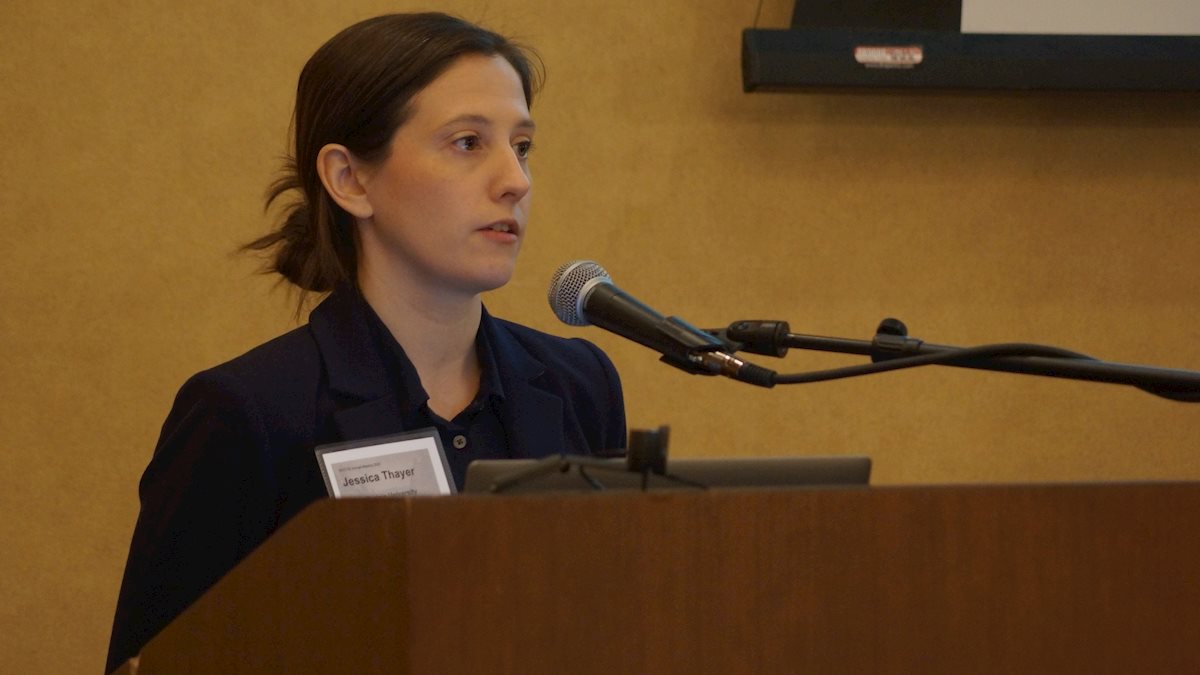
Jessica Thayer, MD - Associate Director, Transitions of Care Program, Department of Medicine
- Associate Director, Rural Health Track for Internal Medicine Residency Program
- Assistant Professor, WVU School of Medicine
What inspired you to pursue clinical and translational research?
I became inspired by a successful pilot study conducted through our post-hospitalization Transitions of Care clinic. We enrolled a small number of participants but the improvements we found showed me that clinical and translational research can rapidly make a direct impact on patient outcomes. I began to pursue other opportunities through the WVCTSI not only to investigate rural health concerns, but also to expand the access of clinical trials and cutting-edge healthcare to more of the people left out of studies who are likely to gain the most from them.
Can you give a brief overview of your current project or area of investigation?
I am currently investigating post-hospitalization outcomes for rural patients who were admitted to the hospital due to a chronic condition. I am interested in the ways we can improve the high mortality faced by our rural population through an improved hospital discharge experience so patients can remain home and healthy.
What did you find most helpful about the Research Scholar Program?
Because the Research Scholar Program is a cohort of early career investigators, I had direct access to a group of highly successful individuals with expertise that served to improve my research questions and study methodology. There’s an inherent network built into the program with connections I would not have made so early in my career without this opportunity to meet regularly with investigators outside of my department.
How did you choose your current research focus or area of study?
As a generalist, my work focuses on preventing, diagnosing, and managing chronic conditions in both the hospital and ambulatory setting. I found that even if I took care of one of my own primary care patients in the hospital many things were lost in the transition such as medication changes, education, and follow-up appointments. Healthcare has become so complex, not just because of the severity of illnesses our patients face, but because of difficulties navigating the system.
My research investigates how we can improve patient outcomes when moving from one healthcare setting to another and better address gaps and disconnections caused by siloed care. I am determined to find ways to improve the process of obtaining the right care at the right time, so our patients are not faced with the decision to defer accessing care until their condition becomes too serious to ignore.
How do you incorporate community or patient perspectives into your work?
One of the most rewarding and interesting aspects of my Research Scholar project has been hearing the patient lived-experiences and perspectives on post-hospitalization care. As a physician, I know what I want to discuss on hospital discharge day and what I expect to happen when they leave. Through the patient interviews we are conducting, I have found out what the patient finds essential during this time, and that this is different than my perspective as a provider. Especially for our rural patients, it is imperative to learn what their experiences truly are rather than basing our research on what we assume is occurring or important to them.
What advice would you give to researchers entering similar programs?
This is a great opportunity to expand your collaborative network and get feedback from investigators with different backgrounds and perspectives. My advice would be to completely “open the hood” and allow the incomplete or imperfect aspects of your research be fully seen by those around you. This really helped me not only fine tune my approach, but enabled me, in the end, to get better data, a wider perspective, and improved methodology that I can use in all my research going forward.
What has been your biggest challenge as an early-stage investigator, and how did you overcome it?
Post-hospitalization care occurs in multiple environments with various providers and over multiple months depending on the patient care needs. As an early career researcher, it can be challenging to know how to find and engage with the key stakeholders who are also invested in this type of care. I was able to leverage the connections I made with established investigators through the Research Scholars Program who facilitated opportunities to meet and collaborate with clinical care leaders and researchers.
How do you stay motivated when things don’t go as planned?
I’ve had to pivot and expand my research interests because clinical research rarely ends up going according to plan. It can be discouraging when a project is not funded or a study design requires changes, again. My motivation continues to be the patient stories that remind me of what I am working to improve in the first place. Hearing the challenges they face in navigating the healthcare system along with the success of an intervention that helped them control their chronic condition allows me to continue on, even when facing barriers within my own work.