Graduate Research Lab Mentors
Wen-Tao Deng, Ph.D., Assistant Professor
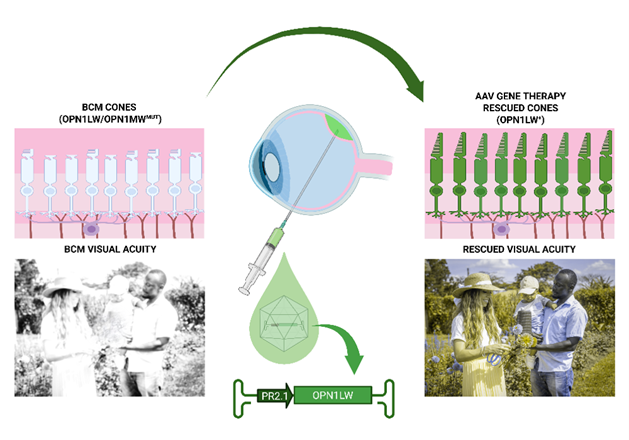
My lab studies cone opsins, the light-sensing proteins that allow cone photoreceptors to detect color and fine visual detail. We focus on Blue Cone Monochromacy, an inherited retinal disease caused by mutations in the cone opsin genes, using mouse models carrying the same mutations found in patients to understand how these mutations disrupt cone opsin structure, function, and intracellular trafficking. We translate these mechanistic insights into therapy, developing AAV-mediated gene therapy to restore cone opsin function and CRISPR/Cas gene-editing approaches to directly correct or silence mutant opsin genes. Trainees in the lab gain experience across this full pipeline, from mouse and cell biology to gene therapy vector design and functional testing of vision.
Roberta Leonardi, Ph.D., Associate Professor
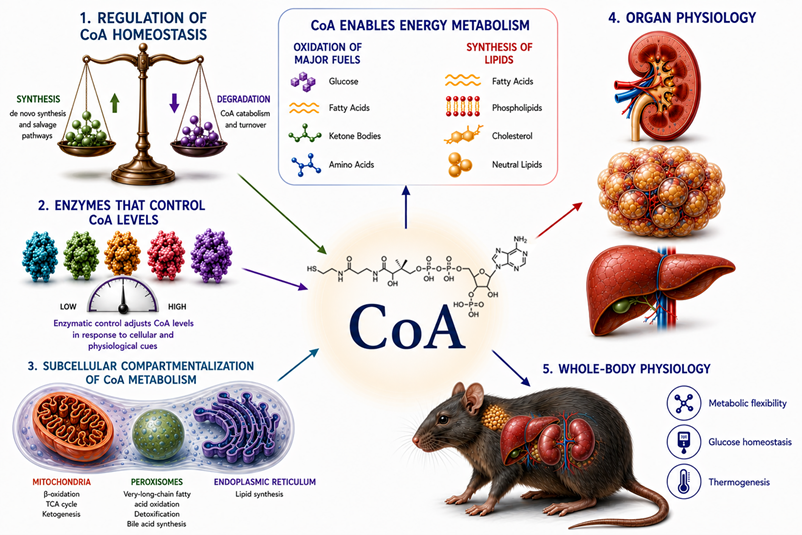
Our laboratory investigates the mechanisms that regulate coenzyme A (CoA) homeostasis, with a particular focus on the enzymes that degrade CoA and control intracellular CoA levels. We seek to understand how these enzymes maintain and dynamically regulate CoA pools within different subcellular compartments and tissues. As an essential cofactor, CoA is required for the oxidation of all major metabolic fuels and for lipid biosynthesis, placing it at the center of energy metabolism. Disruption of CoA homeostasis contributes to metabolic dysfunction, and our long-term goal is to develop strategies to restore normal metabolism in diseases such as diabetes, cancer, and neurological disorders.
To address these questions, we combine biochemistry, molecular biology, mouse genetics, cell culture models, metabolomics, and integrative physiology to investigate CoA metabolism from regulatory enzymes and organelles to tissues and whole organisms. We are particularly interested in understanding how CoA pools are regulated across subcellular compartments and how these distinct pools influence organ function and whole-body physiology. We are always looking for inquisitive, highly motivated students who enjoy asking fundamental biological questions and are excited by metabolism-focused research.
Rong Liu, Ph.D., Assistant Professor
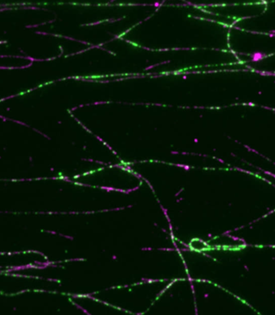
My lab strives to understand the function and regulation of cytoskeletal motors. Motor proteins are the engines of the cell, converting chemical energy into mechanical force to drive essential cellular processes. We integrates protein biochemistry, live-cell imaging, and cutting-edge single-molecule techniques to dissect how these molecular machines work. Currently, we explore these questions in the context of neurosensory diseases and ciliopathies.
Shian Liu, Ph.D., Assistant Professor
My lab focuses on membrane receptors, such as G-protein–coupled receptors (GPCRs), which are involved in the signal transduction processes across the cell membrane. GPCRs represent the largest protein family in the human genome, fulfilling a wide range of physiological roles in various systems: the sensory system (e.g., vision, smell, taste), the neurological system (e.g., mood, behavior), the cardiovascular system (e.g., blood pressure regulation), and the immunological system (e.g., immune response, allergy), among others. They also constitute the largest group of drug targets, with new members being deorphanized each year. We primarily use the state-of-the-art cryo-electron microscopy (cryo-EM) to understand the molecular architecture of these receptors and to identify small-molecule or antibody drugs that can target them to treat human diseases.
Visvanathan Ramamurthy, Ph.D., Professor
Protein Diversity in Sensory Systems: From Mechanism to Therapy
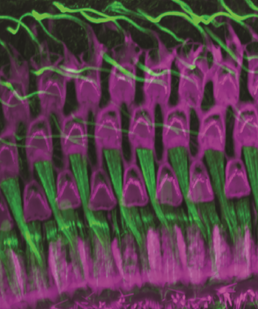
Our laboratory examines how protein diversity influences the development and function of sensory tissues, as well as how subtle variations among related proteins contribute to disease. These insights aim to inform the development of new therapies. Our research focuses on the retina and middle ear, investigating how distinct protein variants support specialized cellular functions, how neighboring support cells affect photoreceptor development and survival, and why certain proteins are essential for structures such as motile cilia. We employ techniques including protein biochemistry, molecular and cell biology, microscopy, animal models, patient-derived induced pluripotent stem cells, and retinal organoids to elucidate disease mechanisms and evaluate potential treatments. A key translational objective is to develop combination therapies that integrate gene therapy with additional strategies to protect photoreceptors and achieve more durable benefits. Ultimately, our goal is to advance treatments for blindness toward clinical trials.
Michael Robichaux, Ph.D., Assistant Professor
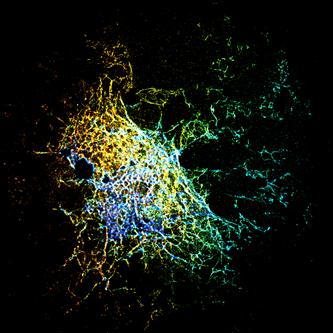
Our laboratory investigates the molecular and cellular mechanisms governing photoreceptor biology and retinal function. We focus on understanding protein trafficking, outer segment maintenance, and how disruptions in these fundamental processes lead to retinal degenerations and visual impairment. To address these hypothesis-driven and exploratory questions, our lab combines advanced imaging techniques, molecular and cellular biology, and customized experimental protocols. We are dedicated to working collaboratively to translate basic mechanistic insights into a deeper understanding of visual health and disease.
Ezequiel Salido, MD/PhD., Assistant Professor
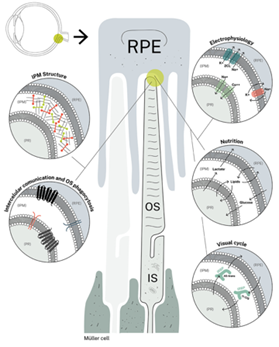
Our laboratory explores the extracellular matrix (ECM) and its crucial role in neuroscience. Our main area of research is the retina, where neuronal photoreceptor cells and glial cells communicate through a specialized extracellular matrix known as the Interphotoreceptor Matrix (IPM). This matrix actively participates in retinal health and disease. Our research is dedicated to decoding the complex roles of the IPM, its composition, and its synthesis. We endeavor to elucidate how the IPM contributes to the progression of visual impairments, such as diabetic retinopathy, macular degeneration, and retinitis pigmentosa. Our laboratory utilizes advanced techniques and methodologies, including genetically modified mouse models, high-resolution microscopy, optical coherence tomography, electrophysiology, adenovirus-mediated gene expression in mice, genetherapy, and various biochemical techniques to analyze protein interactions. We also employ proteomics, RNA sequencing, and metabolomics. Our research, besides its potential to cure blinding diseases, has a broad impact on diverse scientific fields, such as aging, neurodegeneration, biomaterials, brain-machine interfaces, 3D tissue culture, and computational neuroscience.
Tuning the Proteasome: From Molecular Mechanics to Therapeutics
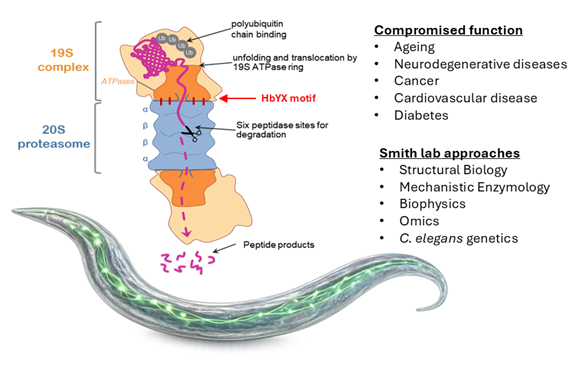
At the center of cellular protein quality control sits the proteasome—a massive, barrel-shaped enzymatic engine responsible for clearing damaged and misfolded proteins. Our laboratory investigates how this molecular machine is allosterically regulated and how we can tune its activity to clear the toxic proteins linked to neurodegenerative diseases. We specialize in the structural and mechanical rules of the 20S proteasome core, studying how regulatory caps use hydrophobic "HbYX" motifs like keys in a lock to open the entry gate. Conversely, we explore how pathological oligomers in Alzheimer’s, Parkinson’s, and Huntington’s diseases physically impair this system, and how restoring gate activation can rescue cells from proteotoxic death.
Trainees in our laboratory operate at the intersection of molecular-scale mechanics and organismal physiology. We integrate recombinant protein biochemistry, quantitative enzyme kinetics, structural biology, and C. elegans genetics to dissect proteasome function. Recently, our group pioneered the use of engineered hyperactive, open-gate 20S proteasome animal models, proving that molecular gate-opening accelerates the clearance of intrinsically disordered proteins in vivo and promotes cellular resilience.
We provide a collaborative, highly supportive training environment backed by continuous NIH R01 funding and active industry partnerships. Our deep commitment to trainee success is reflected in the WVU School of Medicine's Outstanding Achievement in Mentoring Award. Graduate students receive dedicated, hands-on mentorship and leave the lab with a versatile, highly marketable toolkit. We strive to publish our mechanistic discoveries in high-impact journals, ensuring our trainees build the rigorous foundational expertise needed to excel in academic or biotechnology careers.
Bradley Webb, Ph.D., Associate Professor
Cellular Organization of Metabolism in Health and Disease
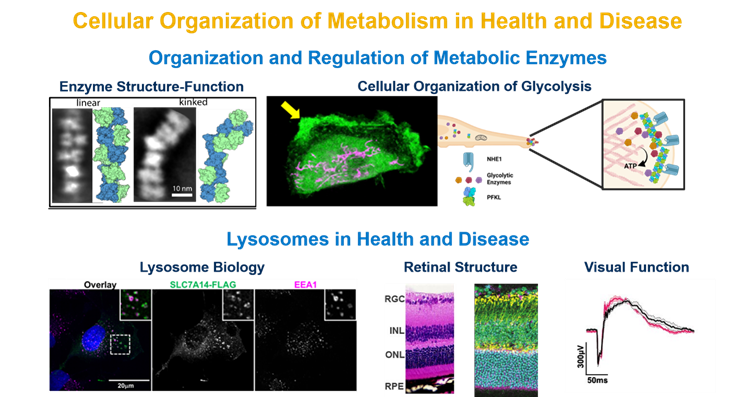
Our laboratory investigates how metabolic enzymes and pathways are organized and regulated within cells. Metabolism is often represented as a series of freely diffusing enzymes and metabolites, but growing evidence suggests that metabolic enzymes assemble into higher-order structures and localize to specific subcellular regions. We seek to understand how this spatial organization allows cells to dynamically control energy production, nutrient utilization, and biosynthesis, and how its disruption contributes to diseases such as cancer, neurodegeneration, and inherited sensory disorders.
A major focus of the laboratory is the spatial regulation of glycolysis. We study how phosphofructokinase-1, a key regulatory enzyme in glucose metabolism, forms filaments and biomolecular condensates and how these structures influence enzyme activity and cellular function. A second focus is the relationship between lysosome biology and metabolism in sensory organ function. We seek to define the cellular mechanisms linking lysosomal dysfunction to inherited disorders of vision and hearing. To address these questions, we combine biochemistry, molecular and cellular biology, fluorescence and electron microscopy, structure-function analysis, and animal models. We are particularly interested in recruiting curious and motivated students who enjoy interdisciplinary research and want to connect fundamental molecular mechanisms with cell behavior and disease.